Regulation (EU) 2023/1542 does not replace REACH — it sits on top of it. Article 6 expressly leaves Regulation (EC) 1907/2006 (REACH) fully applicable to batteries, and Annex XVII restrictions plus the candidate-list SVHC regime attach to every homogeneous material in a cell or pack. This paper maps a material-risk testing strategy for nickel-metal hydride (NiMH) products so an exporter can answer the European buyer's standard question: "Where are your REACH declarations per component?"
The Annex XVII entries relevant to batteries are selected by material, not by product name: entries 68 and related restrictions on C9–C14 perfluorocarboxylic acids (PFCAs) and their salts matter for PTFE-treated separators, fluorinated binders and some processing aids; organotin restrictions (entries 20 and its amendments) concern stabilisers in PVC sleeves and cables; phthalate entries 51/52 (DEHP, BBP, DBP, DIBP) apply to plasticised PVC and soft components; PAH restrictions under entry 50 apply to rubber and plastic parts that touch skin or are held in hand, such as grips and keypads on battery-powered tools; cadmium, lead and their compounds appear both as battery-law limits and as REACH entries in accessories. A NiMH cell core is comparatively clean — nickel, hydrogen-storage alloy, steel and aqueous KOH — so the real exposure sits in sleeves, labels, PCBs, wires, connectors and potting compounds.
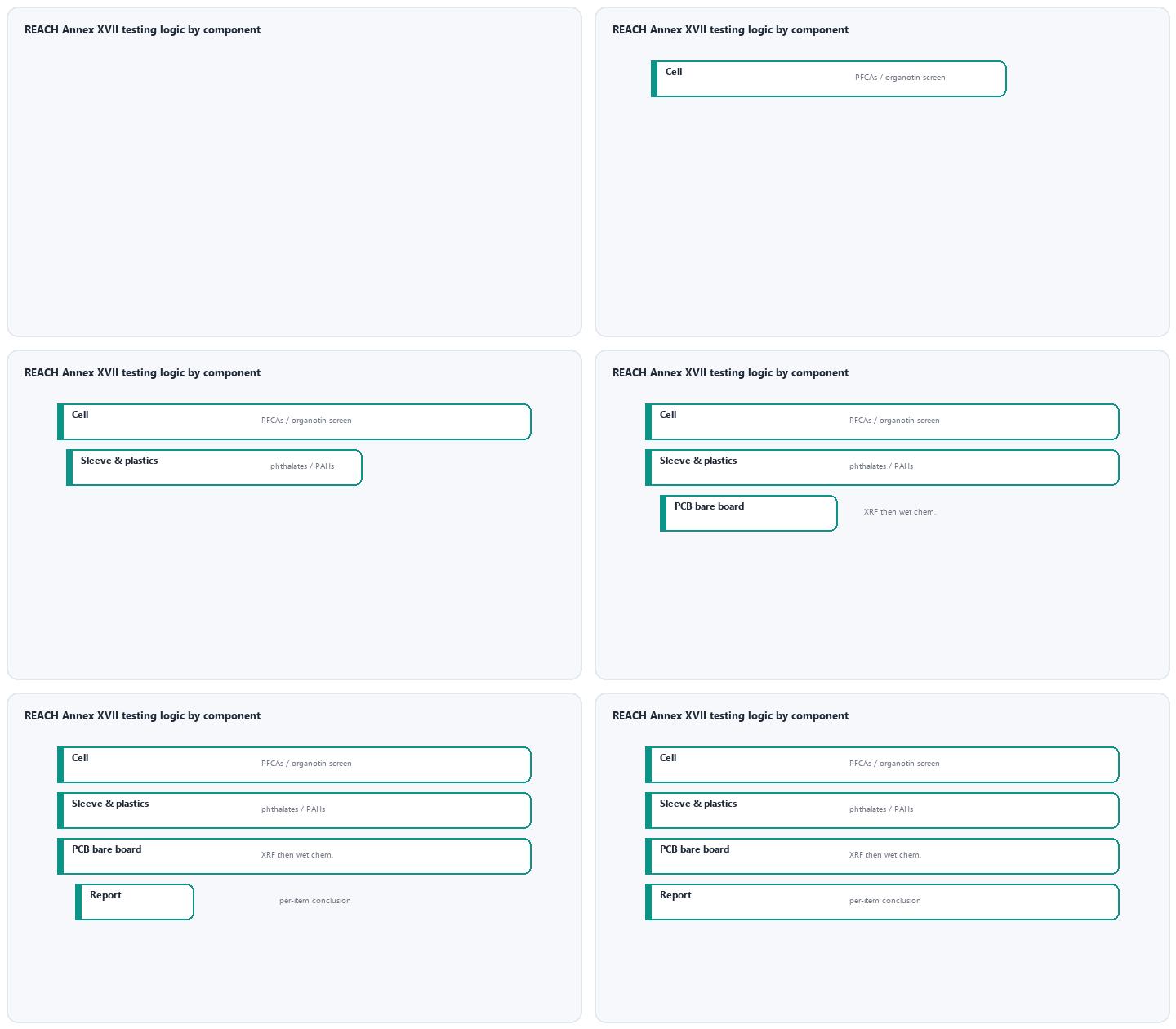
Testing every material for every substance is wasteful; accredited practice is a two-stage funnel. Stage one uses X-ray fluorescence (XRF) screening on representative points of each homogeneous material — following the sampling principle of roughly 0.2 g for small parts, 0.5 g for standard parts and 1.7 g for large parts — to flag elemental signals such as lead, cadmium, chromium or bromine. Stage two sends only positive or ambiguous materials to wet chemistry: GC-MS for phthalates, PAHs and organotins, LC-MS/MS for PFCAs and PFAS families, ICP-OES/ICP-MS for metals. A typical laboratory quote illustrates the logic: a full PFCA C9–C14 plus organotin battery-cell package runs in the low thousands of RMB, while an optional 221-substance PFAS screen replaces the narrower PFCA package when a buyer demands family-wide coverage.
Beyond Annex XVII bans, the REACH candidate list imposes information duties: if any article in the battery contains a listed SVHC above 0.1 % weight by weight, the supplier must communicate safe-use information down the chain on request (Article 33), and the EU importer placing that article on the market must notify ECHA's SCIP database under the Waste Framework Directive. For a NiMH exporter the practical deliverable is a per-material SVHC declaration refreshed at each candidate-list update (the list is updated twice yearly), backed by supplier declarations from plastics and electronics vendors. Because the duty triggers on the article level, a single non-compliant connector can create the notification obligation for the whole pack.
A buyer-ready REACH pack for a NiMH family contains: a bill of materials split into homogeneous materials; a material declaration (IEC 62474 format is widely accepted) listing restricted and declarable substances per material; XRF screening records; targeted wet-chemistry reports with method standards and detection limits; supplier letters for purchased components; an SVHC statement keyed to the current candidate-list version; and a change-control rule that triggers reassessment on any material, vendor or process change. Dating each document matters: auditors reject undated "evergreen" declarations and expect refreshment within months of a candidate-list update.
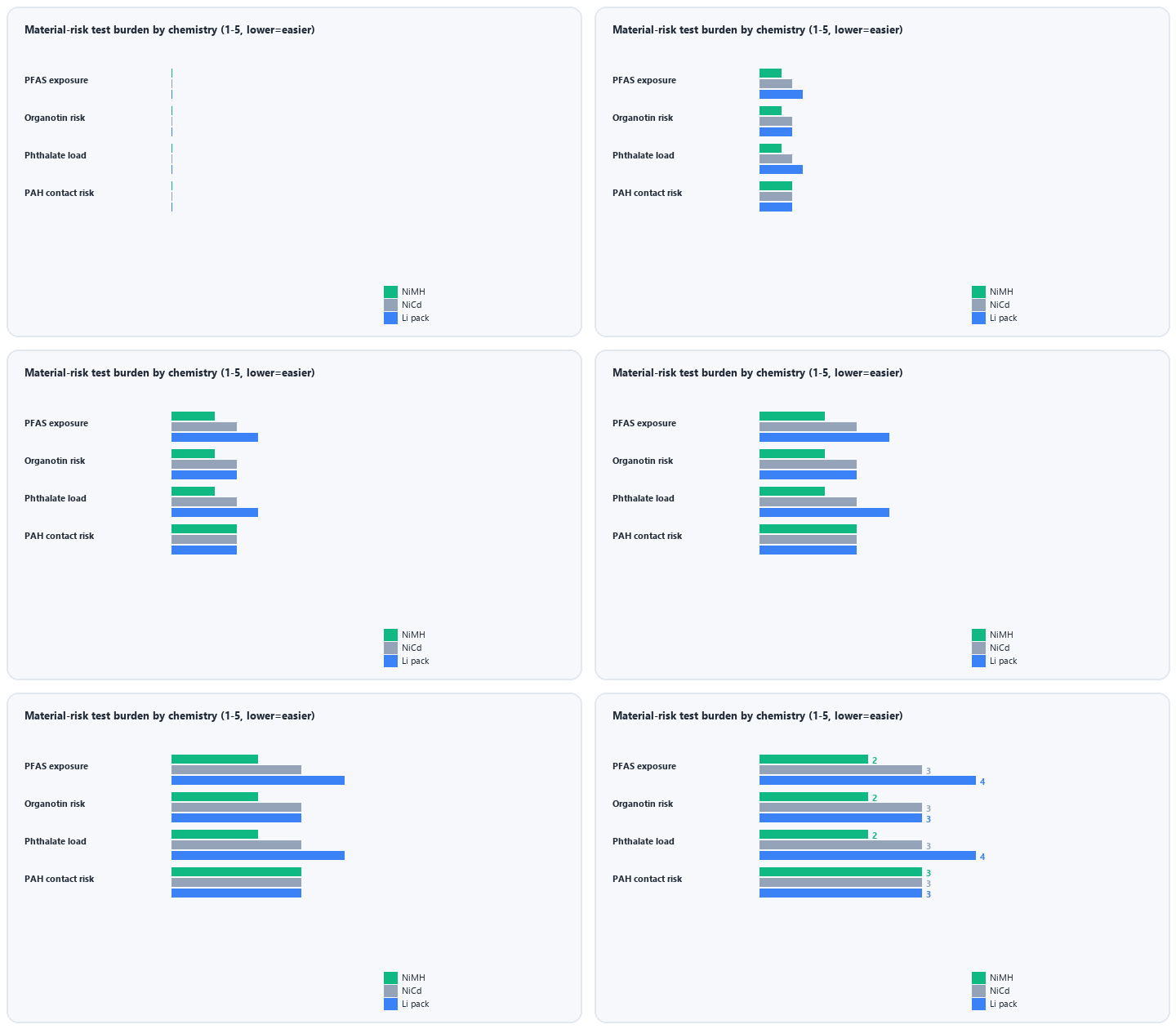
The layered comparison above illustrates that NiMH carries a structurally lighter REACH burden than chemistries built around fluorinated electrolytes, complex organic additives or cadmium active material: no organic electrolyte solvents, no cadmium electrode, fewer fluorinated films in the core cell, and mature steel/nickel supply chains with well-characterised declarations. The remaining work — sleeve, wire and PCB evidence — is standard and predictable, which lets a disciplined factory hold a standing dossier rather than re-testing per order.
Weijiang Power maintains a standing REACH dossier for its NiMH range: IEC 62474 material declarations, XRF screening plus targeted GC-MS/LC-MS/ICP reports for sleeves and electronics, and SVHC statements refreshed with each candidate-list update. Share your customer's REACH questionnaire or restricted-substance list and we return the matched declarations, method standards and detection limits — formatted for direct upload into your importer's compliance portal.


