Regulation (EU) 2023/1542 is the first EU battery law to regulate performance and durability, not only safety and substances. Article 9 with Annex III covers portable batteries (excluding button cells in the general-purpose case), Article 10 with Annex IV covers LMT, SLI and industrial batteries, and both follow a disclose-then-threshold logic. This paper translates the parameter lists into a nickel-metal hydride (NiMH) test and specification program.
From 18 August 2024, manufacturers of general-purpose portable rechargeable batteries must make electrochemical performance and durability parameters available with the product; binding minimum thresholds apply from 18 August 2027 or 18 months after the delegated act setting them, whichever is later. For rechargeable industrial batteries above 2 kWh, parameters have been available since 18 August 2024 and binding thresholds follow from 18 August 2028. The disclosure-first design gives industry time to align test methods, but buyers — especially medical, industrial and public-procurement accounts — already request the parameter sheet at quotation stage.
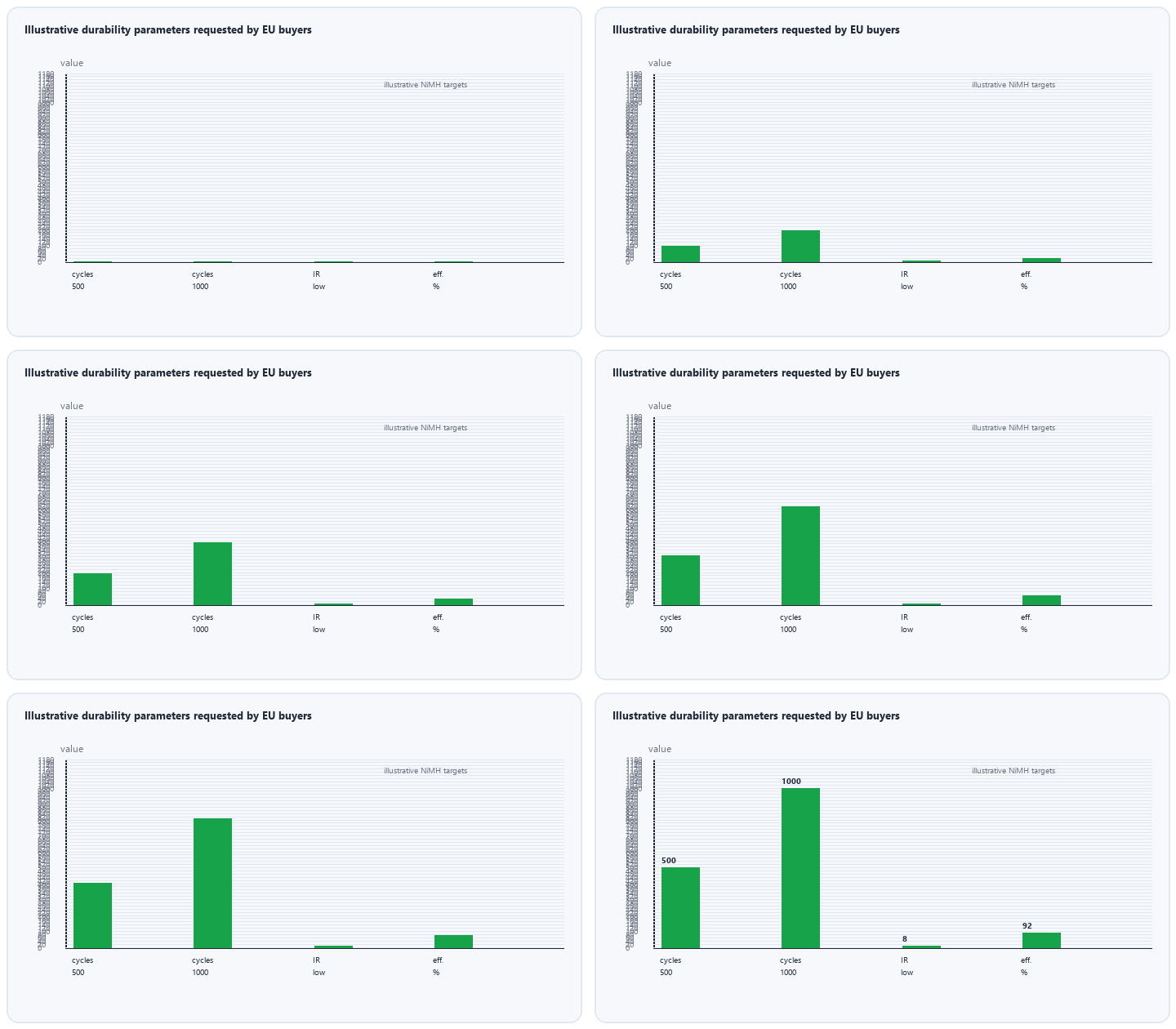
Annex III asks for: rated capacity and the capacity retained after a defined number of charge-discharge cycles; internal resistance (or impedance); the charging and discharging conditions under which the values are measured; the expected lifetime under reference conditions, including cycle count to a defined capacity-fade endpoint (commonly 80 % of rated capacity); and, where relevant, performance at temperature extremes. For NiMH the underlying methods already exist in IEC/EN 61951-2 (sealed nickel-metal hydride cells and batteries) and IEC 61436/61951 family standards: standard charge at 0.1 C for 16 hours, discharge at 0.2 C, cycle life under controlled temperature, and internal resistance by the AC milliohm method. A defensible datasheet cites the exact charge/discharge regime, ambient temperature and fade endpoint rather than a bare "500 cycles" claim.
Annex IV extends the set for LMT, SLI and industrial batteries with round-trip energy efficiency and its evolution over cycles, power capability at defined state of charge and temperature, calendar-aging behaviour, self-discharge rate and expected lifetime under defined duty profiles. For large NiMH backup and traction packs this means recording the reference duty cycle (float standby, periodic deep discharge, high-rate pulse), the float-voltage and temperature regime, and the capacity-check interval. NiMH ageing is heat-driven: the same pack loses capacity at very different rates at 20 °C versus 40 °C float, so durability claims without a temperature condition are meaningless under the Regulation's evidence standard.
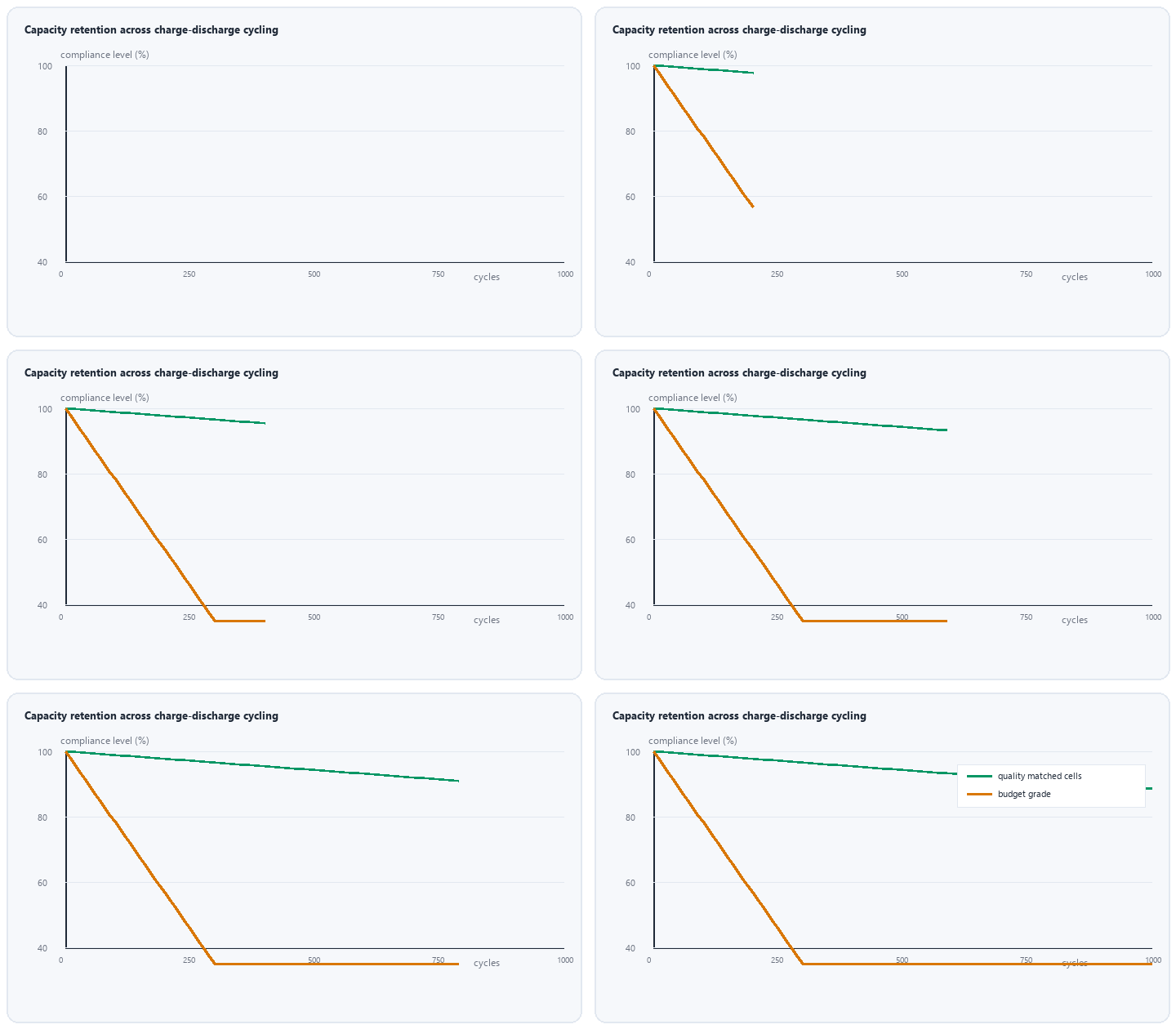
Conformity assessment under Module A requires the parameters to be traceable to test records: lot samples cycled to the fade endpoint, internal-resistance distributions with statistical limits, efficiency measured by integrated charge/discharge energy, and self-discharge measured after defined storage. Low-self-discharge (LSD) NiMH cells add a retention test after 12 months at 20 °C. Series packs require cell-matching data because the weakest cell governs pack cycle life; a credible supplier reports the matching band (capacity ±2–3 %, resistance ±10 %) and the welding/assembly controls that preserve it.
Procurement engineers use the durability sheet for three decisions: warranty reserves (cycle count and fade define replacement rates), total-cost comparison against primary cells and competing chemistries, and service-interval planning for sealed devices. Missing or vague durability data pushes a supplier toward the "unverified" tier regardless of price. Conversely, a supplier who can show cycle curves at two temperatures, resistance distributions and lot-to-lot consistency wins design-ins precisely because the buyer can defend the choice in its own Annex III/IV documentation.
Weijiang Power ships every NiMH family with an Annex III/IV-aligned durability pack: rated and post-cycle capacity to the 80 % fade endpoint under cited IEC 61951-2 regimes, AC internal-resistance distributions, self-discharge and temperature-conditioned cycle curves, and cell-matching bands for welded series strings. Send your duty profile, expected service life and operating temperature window and we return the parameter sheet with the underlying test records for your technical file.


