Nickel sits at the centre of Europe's strategic-materials policy and of the nickel-metal hydride (NiMH) chemistry at the same time. The Critical Raw Materials Act (CRMA, Regulation (EU) 2024/1252) lists nickel as a strategic raw material, while Regulation (EU) 2023/1542 drives recycled-nickel demand through Articles 8 and 70–72. This paper connects the two regimes and explains why NiMH is structurally well placed for the circular-materials decade.
The CRMA benchmarks Europe's supply security: benchmarks for domestic extraction, processing and recycling, and diversification away from single-country dependence. Nickel matters because it underpins stainless steel, specialty alloys and every major battery chemistry — lithium-ion cathodes and NiMH electrodes alike. Europe processes only a fraction of its nickel consumption domestically, so the Act sets targets for recycled content, extraction capacity and strategic-project status. For battery buyers this translates into procurement questions about nickel origin, recycled share and supply-chain concentration — questions that arrive through the Article 47–53 due-diligence questionnaire and the Article 8 recycled-content file.
As Article 8 documentation begins (2028) and thresholds approach (6 % recycled nickel from 2031, 15 % from 2036 for covered batteries), demand for qualified recycled nickel grows faster than supply, and market reporting indicates a price premium for EU-compliant recycled nickel over virgin material. The premium is an accounting cost but a strategic benefit: recycled nickel bypasses mine-permitting timelines, reduces import dependence, carries a smaller carbon footprint and shortens the due-diligence chain because scrap origin is documented rather than traced to a mine. Procurement teams increasingly accept the premium as insurance against virgin-price volatility and CRMA-driven mandates.
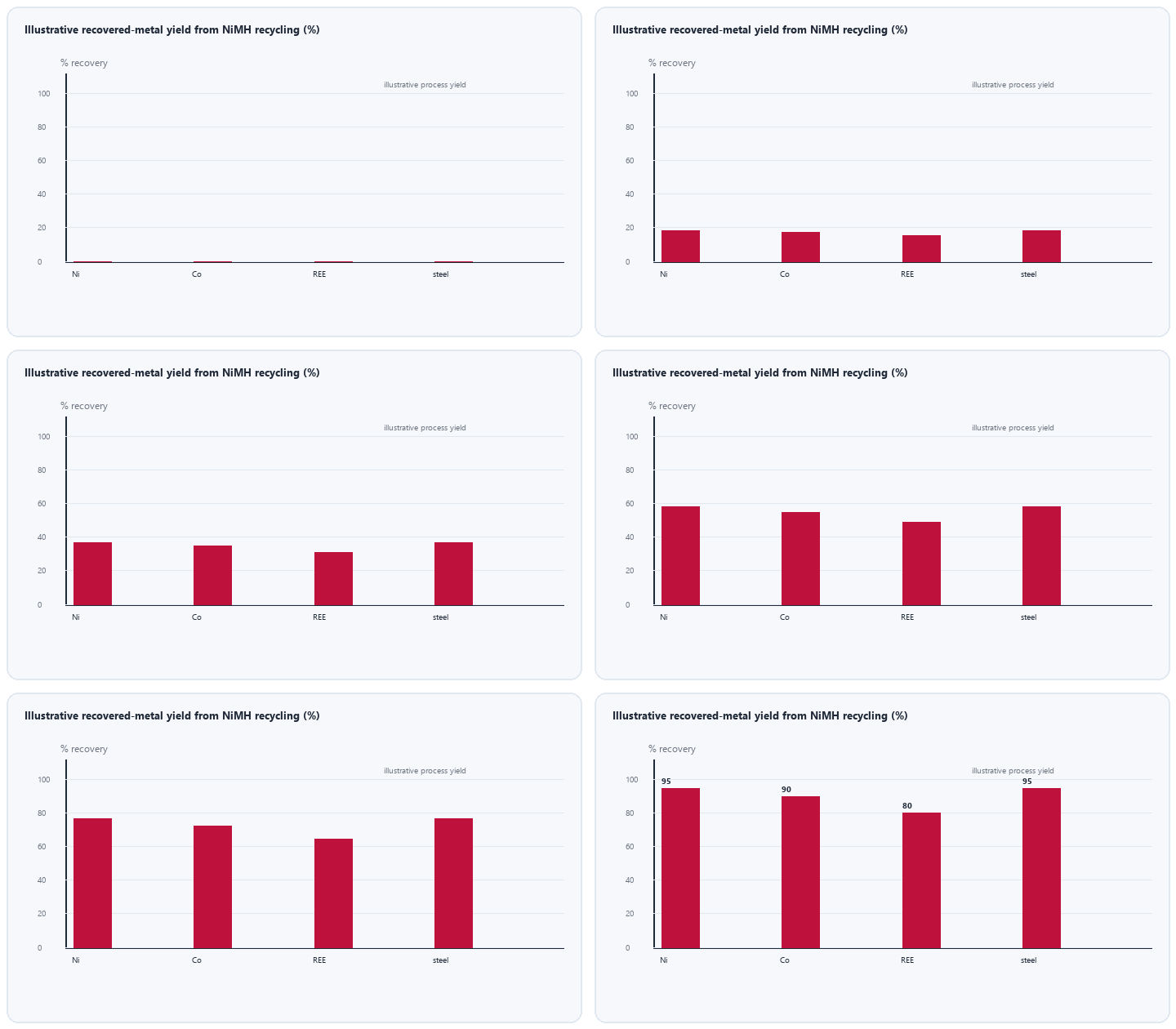
NiMH cells are predominantly nickel and steel: the positive electrode uses nickel oxyhydroxide on nickel foam or sintered substrate, the can and current collectors are nickel-plated steel, and the negative hydrogen-storage alloy contains nickel with rare-earth mischmetal. There is no lithium salt, no organic electrolyte and no cobalt (or only traces in some alloys). Hydrometallurgical recycling dissolves the nickel fraction cleanly, and the recovered nickel sulfate or metal feeds stainless steel, alloy or — after purification — new battery electrodes. The illustrative recovery yields above show why recyclers value NiMH feedstock: nickel and steel recovery above 90 % is technically demonstrated at industrial scale, and the rare-earth fraction is itself recoverable with modern selective leaching.
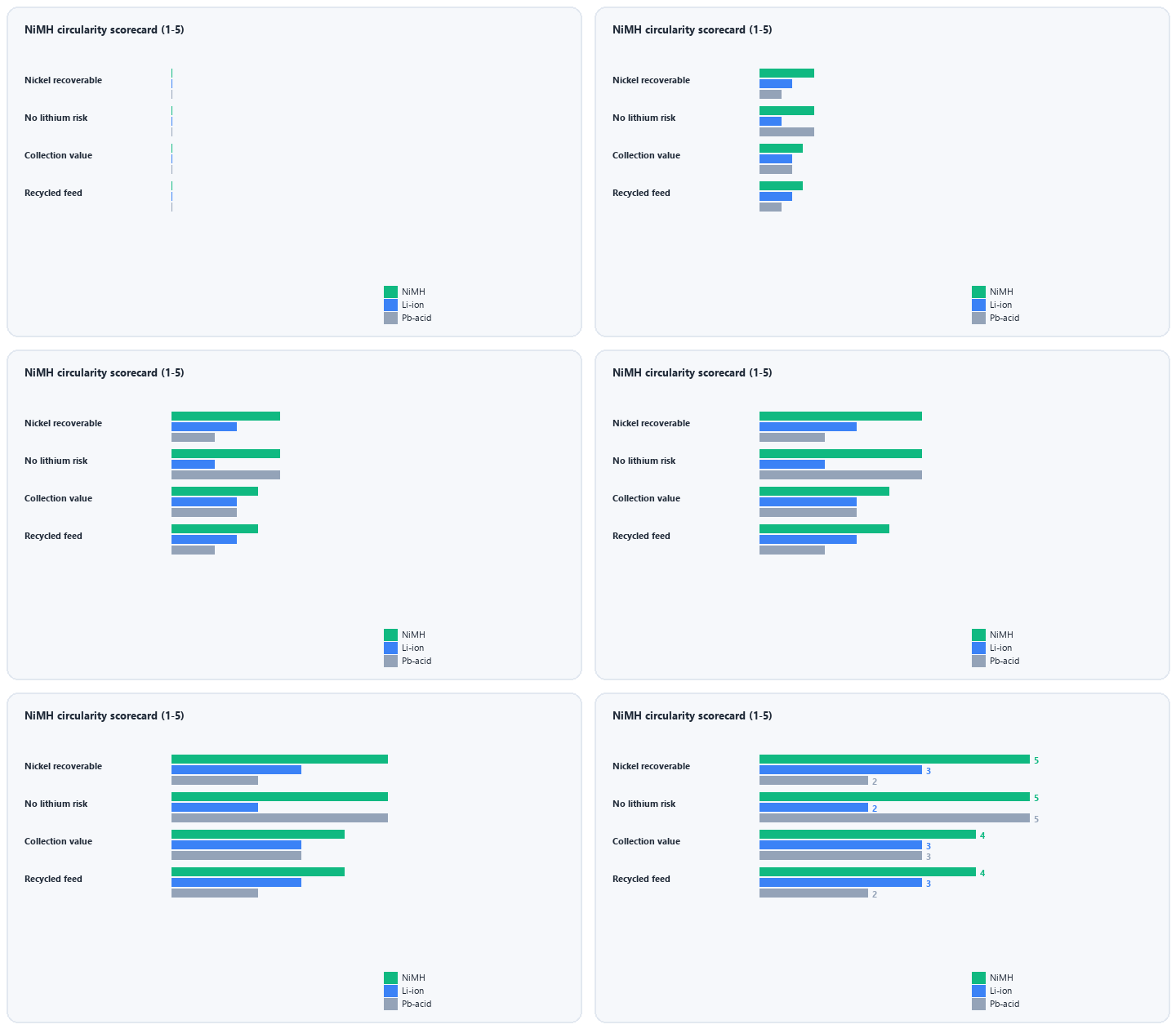
Three articles close the loop. Article 71 sets collection targets (portable batteries 63 % by 2027, 73 % by 2030); Articles 70–72 and Annex XII set material-recovery targets (90 % of Co/Cu/Pb/Ni by 2027, 95 % by 2031); Article 8 then feeds recovered nickel back into new batteries through minimum recycled shares. NiMH benefits at every stage: high collection value because of nickel content, mature recovery routes, and direct reuse of the recovered metal in the same chemistry family. A supplier who documents this loop — collection partner, recovery route, mass-balance certificate — hands its customer a ready-made CRMA and Article 8 narrative.
A nickel-circularity pack for European buyers should contain: nickel origin and alloy composition declarations; chain-of-custody certificates distinguishing virgin, recycled and scrap-derived nickel; the supplier's Article 47–53 due-diligence policy; where available, recycled-content mass balance per production period; and end-of-life guidance identifying NiMH as a nickel-bearing recyclable stream. Claims must stay quantitative and labeled: "recyclable" requires a demonstrated recovery route, while "recycled content" requires mass-balance evidence — marketing language without both is increasingly rejected by compliance portals.
Weijiang Power builds NiMH cells on documented nickel supply chains: origin and alloy declarations, recycled-nickel mass-balance evidence, an Annex X due-diligence policy and end-of-life recycling guidance for European customers. Ask for our nickel-circularity pack with your next RFQ and we will map your product's nickel content, recycled-share evidence and CRMA-relevant documentation in one file.


