Article 8 of Regulation (EU) 2023/1542 requires selected battery types to declare, and eventually meet minimum levels of, recycled cobalt, lead, lithium and nickel in active materials. Because nickel-metal hydride (NiMH) chemistry is built on nickel, the rule — although it does not apply to portable batteries — shapes how large NiMH industrial packs and their nickel supply chains will be documented from 2028 onward. This paper tabulates the thresholds and the evidence required.
Article 8 covers SLI batteries and rechargeable industrial batteries above 2 kWh, EV batteries and LMT batteries whose active materials contain cobalt, lead, lithium or nickel. Portable batteries are excluded, mirroring Article 7. Obligations arrive in two waves: from 18 August 2028 (or 24 months after the delegated acts defining calculation methods), covered batteries must document the recycled share of each listed metal; binding minimum levels apply from 2031 (first stage) and tighten in 2036 (second stage). A NiMH pack below 2 kWh therefore has no recycled-content obligation; a large stationary NiMH battery above 2 kWh does.
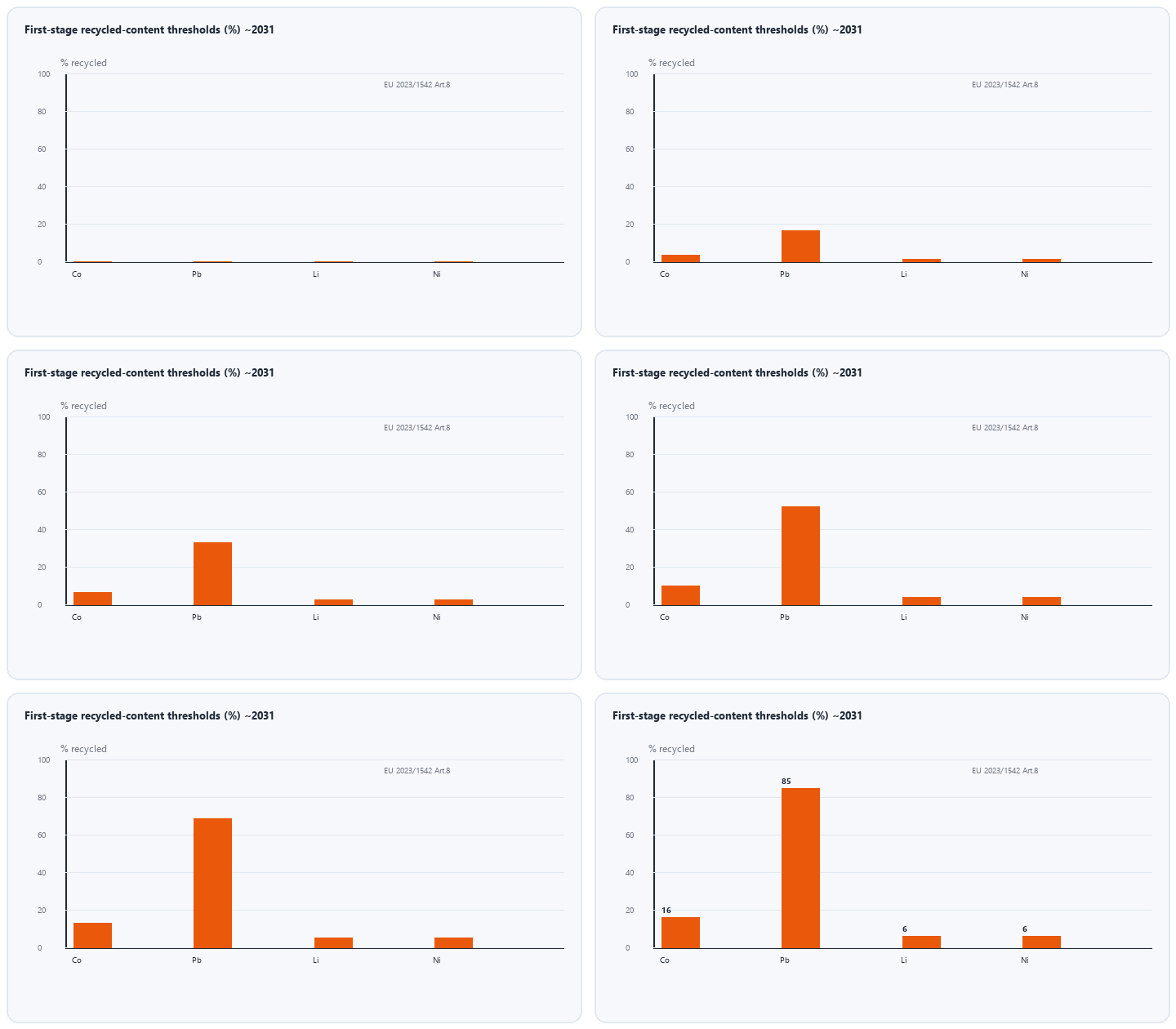
The first-stage minimums (from 2031) are 16 % recycled cobalt, 85 % recycled lead, 6 % recycled lithium and 6 % recycled nickel. The second-stage minimums (from 2036) rise to 26 % cobalt for LMT (with category-specific figures), 85 % lead, 12 % lithium and 15 % nickel. "Recycled" means material recovered from waste batteries within the EU or equivalent overseas streams, calculated under the delegated methodology with chain-of-custody documentation; scrap generated and re-fed inside a single manufacturing plant does not count as post-consumer recycled content. The percentages attach to the active material fraction of each metal, not to total battery mass.
A NiMH positive electrode is nickel oxyhydroxide on nickel foam or sintered substrate, with nickel also in the cell can and current collectors; nickel is therefore both an active-material and structural metal. Meeting a 6 % then 15 % recycled-nickel share requires qualified recycled nickel sources — nickel sulfate or nickel metal derived from battery and alloy scrap through hydrometallurgy — validated for purity because trace contaminants degrade hydrogen-storage alloy performance. Market signals already exist: industry reporting points to a premium for EU-compliant recycled nickel over virgin nickel, and buyers treat documented recycled content as supply-security rather than green marketing because it reduces exposure to virgin-nickel price volatility and critical-raw-material risk.
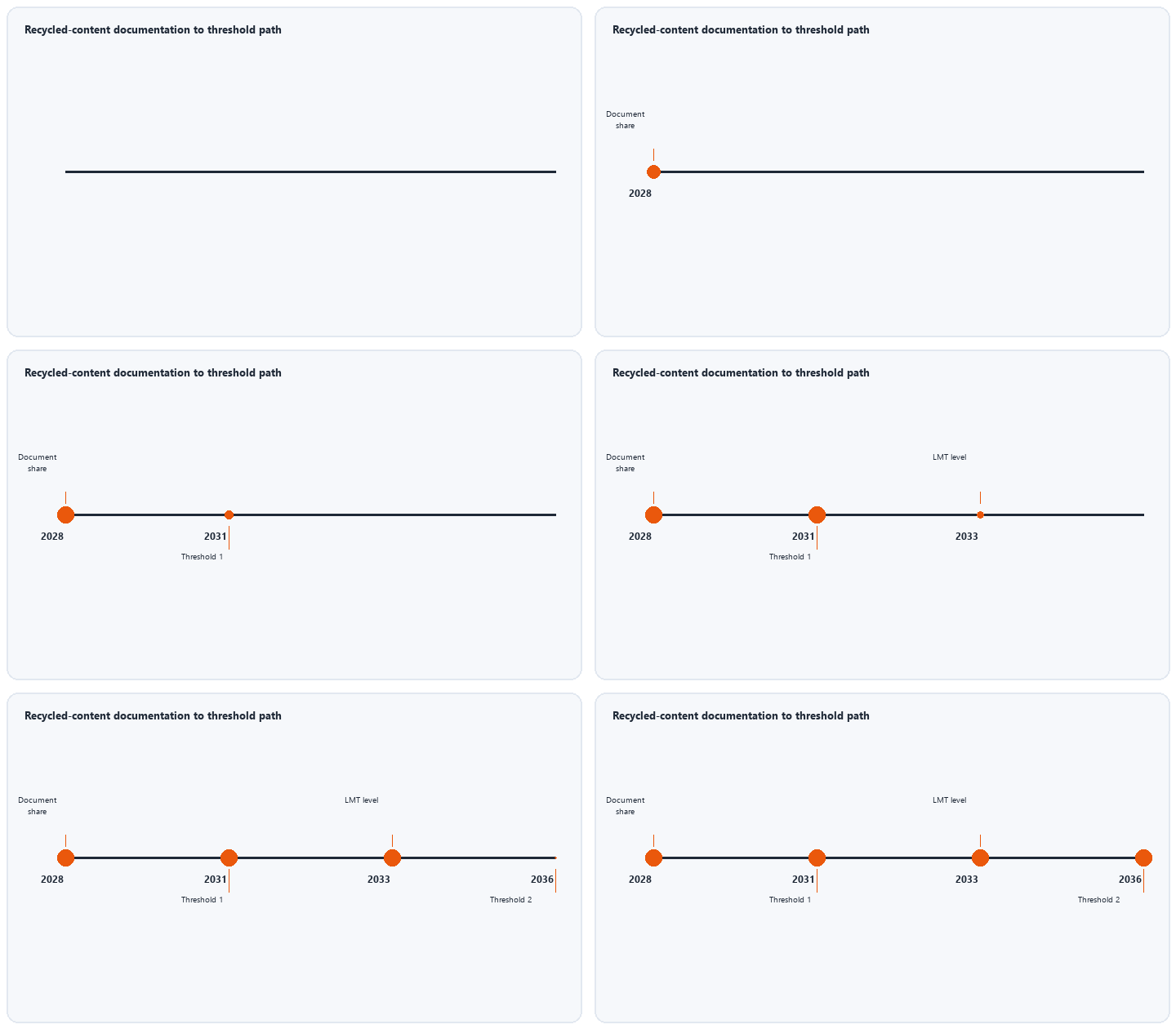
The recycled share is calculated per metal as recycled input mass divided by total input mass of that metal in active materials over a defined period, supported by mass-balance certificates from suppliers and independent verification consistent with the conformity-assessment route. From 2028 the information appears in technical documentation and the QR/label information; from the threshold dates non-conforming covered batteries cannot be CE-marked. Manufacturers should therefore begin supplier qualification now: recycled nickel certificates, impurity certificates, lot traceability from recycler to electrode, and an internal mass-balance ledger.
Although portable NiMH cells face no Article 8 minimums, their nickel content is highly recyclable and the European recovery infrastructure for nickel-bearing batteries is mature (see the separate paper on NiMH hydrometallurgy). A voluntary recycled-content statement — conservative, mass-balanced and clearly labeled as outside the Article 8 obligation — answers corporate procurement scorecards and supports the due-diligence narrative required by Articles 47–53. The strongest commercial position combines legal compliance for large packs with credible voluntary circularity for small cells.
Weijiang Power maps every NiMH product against the Article 8 scope, maintains nickel supply-chain records with mass-balance traceability for large industrial packs above 2 kWh, and provides voluntary recycled-content statements for portable lines. Share your pack Wh and your customer's recycled-content questionnaire and we return the scope decision, nickel certificates and calculation worksheet in the Article 8 format.


