Paper B turns the monitor's load profile into a procurement decision: which chemistry, how many cells, what capacity, and how the pack must be protected and charged. It compares nickel-metal hydride against lithium-ion and primary cells, works a capacity calculation against real monitor datasheets, and identifies the pack-construction details that determine field reliability.
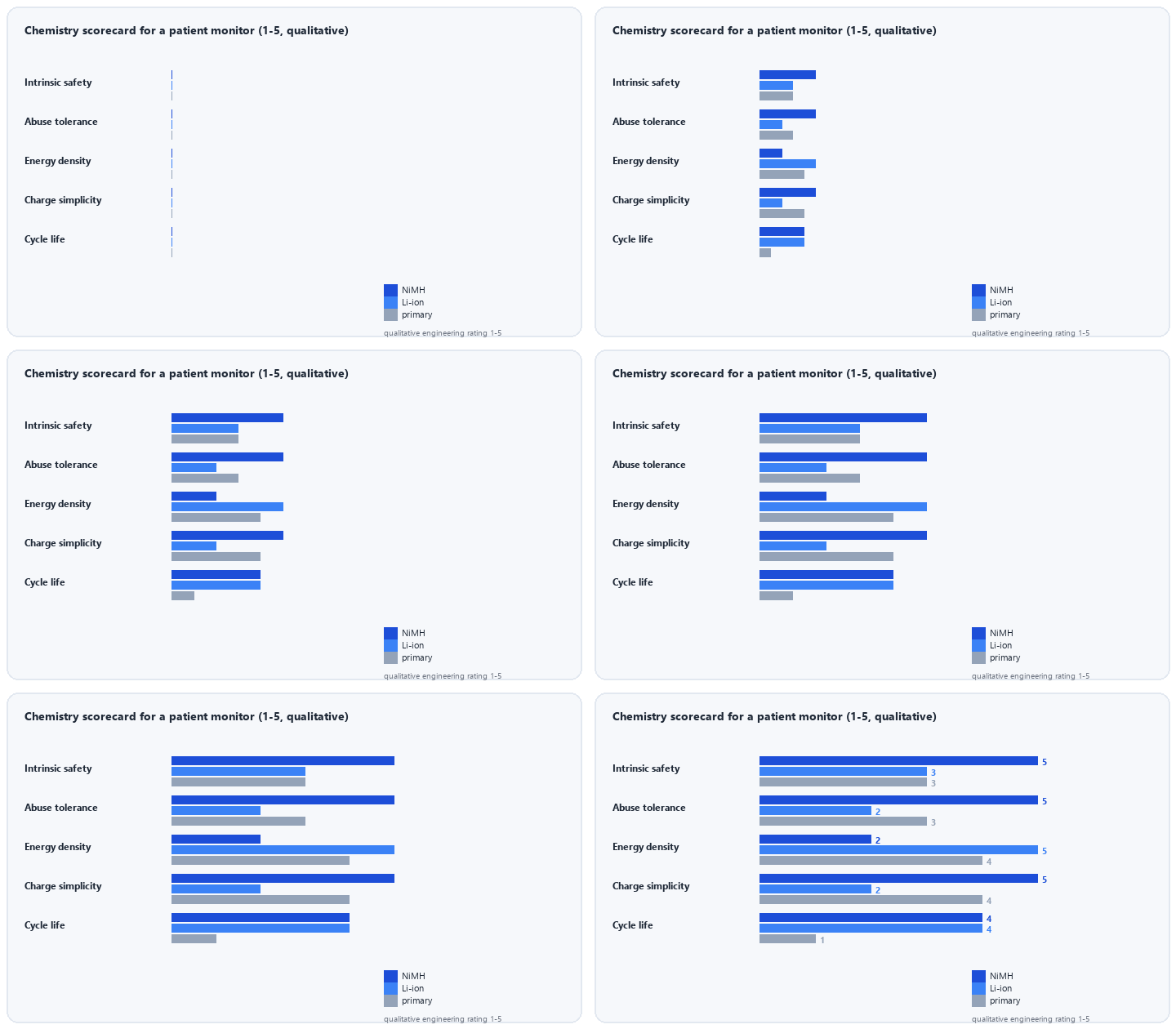
Lithium-ion dominates new high-end designs because of energy density: a 9-cell 10.8–11.1 V pack can run a monitor for the better part of a shift, and 18650-based 2S–4S packs of 2600–3500 mAh cells are standard. Its price is complexity — mandatory per-cell monitoring, precise charge control and a flammable organic electrolyte. NiMH concedes gravimetric energy density but offers an aqueous electrolyte with extremely low thermal-runaway risk, simple -ΔV charge termination, tolerance of shallow dock cycling, and gradual capacity fade rather than sudden death. Primary cells are confined to low-use backup roles. For fleet and transport monitors where weight is secondary to safety, service life and total cost, NiMH remains a rational — and often specified — choice.
Monitors are built around one of two rails. Compact and handheld units commonly use 7.2–7.4 V (six NiMH cells in series, or two Li cells); full-size multi-parameter monitors use 10.8–14.8 V (nine to twelve NiMH cells, or three/four Li cells). Series count is fixed not by nominal voltage alone but by the lowest voltage the DC/DC stage accepts at end-of-discharge under NIBP surge — the rail must not collapse during cuff inflation even with an aged, warm or cool pack.
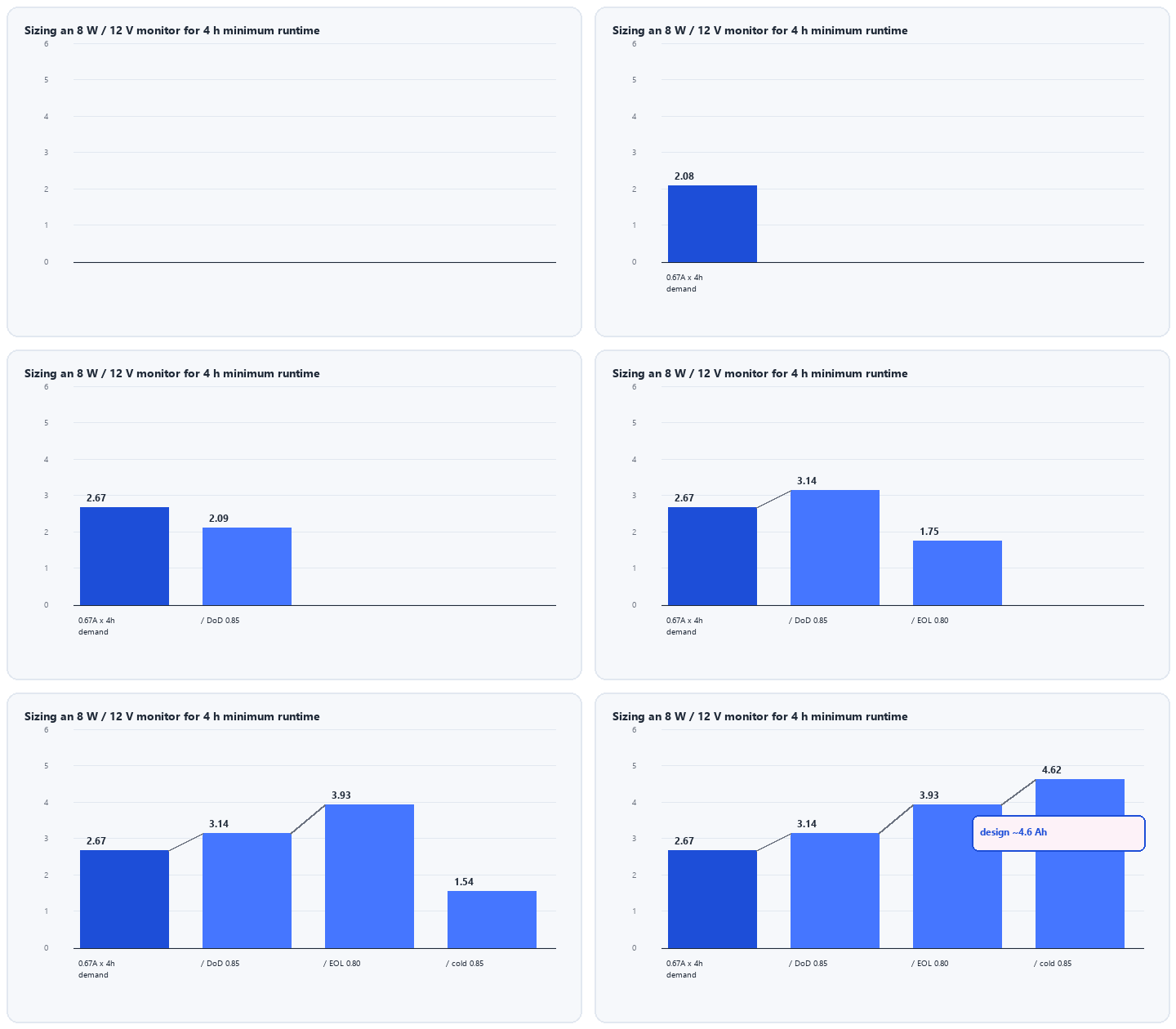
Take an 8 W monitor on a 12 V rail: average current is roughly 0.67 A. A four-hour minimum runtime (a common transport target) demands 2.67 Ah raw. Applying a 0.8 depth-of-discharge limit, a 0.8 end-of-life derating and a 0.85 temperature margin raises the design target to about 4.9 Ah — which is exactly why datasheets cluster around 4.2–4.8 Ah for a four-to-five-hour claim. The arithmetic exposes the optimistic error: a 2.6 Ah pack sized on nameplate average current misses the four-hour target well before end of life.
The NIBP compressor and thermal recorder are pulse loads: the pack is chosen on internal resistance as much as capacity. In a series string the weakest cell governs surge voltage, so medical-grade NiMH packs are binned for matched open-circuit voltage (within roughly 50 mV across a six-cell string), matched internal resistance and matched capacity, with welded tabs rather than hand solder. A thermistor supervises charge temperature, because NiMH charge acceptance falls above about 45 °C and a monitor enclosure stacks the pack near the power supply and display heat.
Monitors are docked between cases, which suits NiMH: constant-current charge with -ΔV or temperature-rise termination, a timed top-up and a small maintenance current let a docked monitor stay ready indefinitely without overcharge damage. Design teams should specify charge time to 90 % — the figure IEC 60601-2-27 requires manufacturers to publish — and verify it with the monitor powered on, since most clinical charging happens in standby.
Weijiang Power builds graded, welded NiMH packs for patient-monitor OEMs: defined voltage/resistance/capacity bins, NTC and protection integration, connectorised assemblies and IEC 62133-1 plus UN 38.3 documentation. Share your reference configuration and minimum-runtime target and we will size, build and document the pack accordingly.


