Paper B compares the three chemistries used in 24 V powered-wheelchair systems — sealed lead-acid, nickel-metal hydride and lithium-ion — works a range-based capacity calculation, and specifies the pack construction needed to survive traction currents day after day.
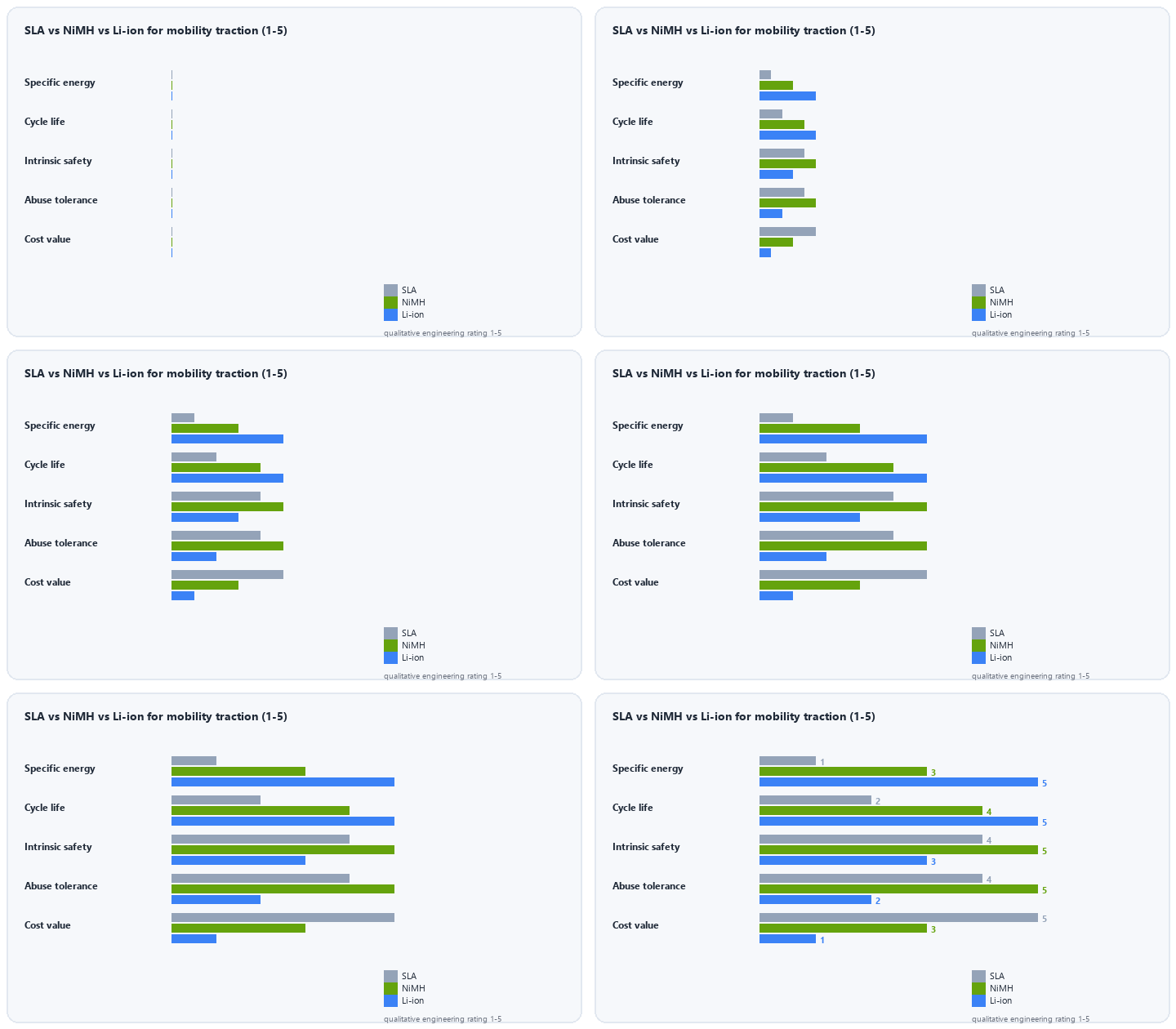
SLA remains the price leader: simple, tolerant and recyclable, but heavy, and its 300–500-cycle life collapses under daily deep discharge, while voltage sag under load makes the fuel gauge pessimistic on hills. Lithium-ion (often a 7S 24 V configuration, e.g. 8.8–20 Ah packs rated for 15–30 A continuous) is light and reaches 500–1000+ cycles, but requires a BMS managing every cell and careful compliance for travel. NiMH occupies the middle: roughly 500 cycles to 80 %, no heavy-metal cadmium, an aqueous intrinsically safer chemistry, high-rate tolerance and markedly less weight than SLA — with simple -ΔV charging and no mandatory per-cell active management. For an OEM upgrading an SLA-era chair without adopting lithium supply-chain complexity, NiMH is the pragmatic step.
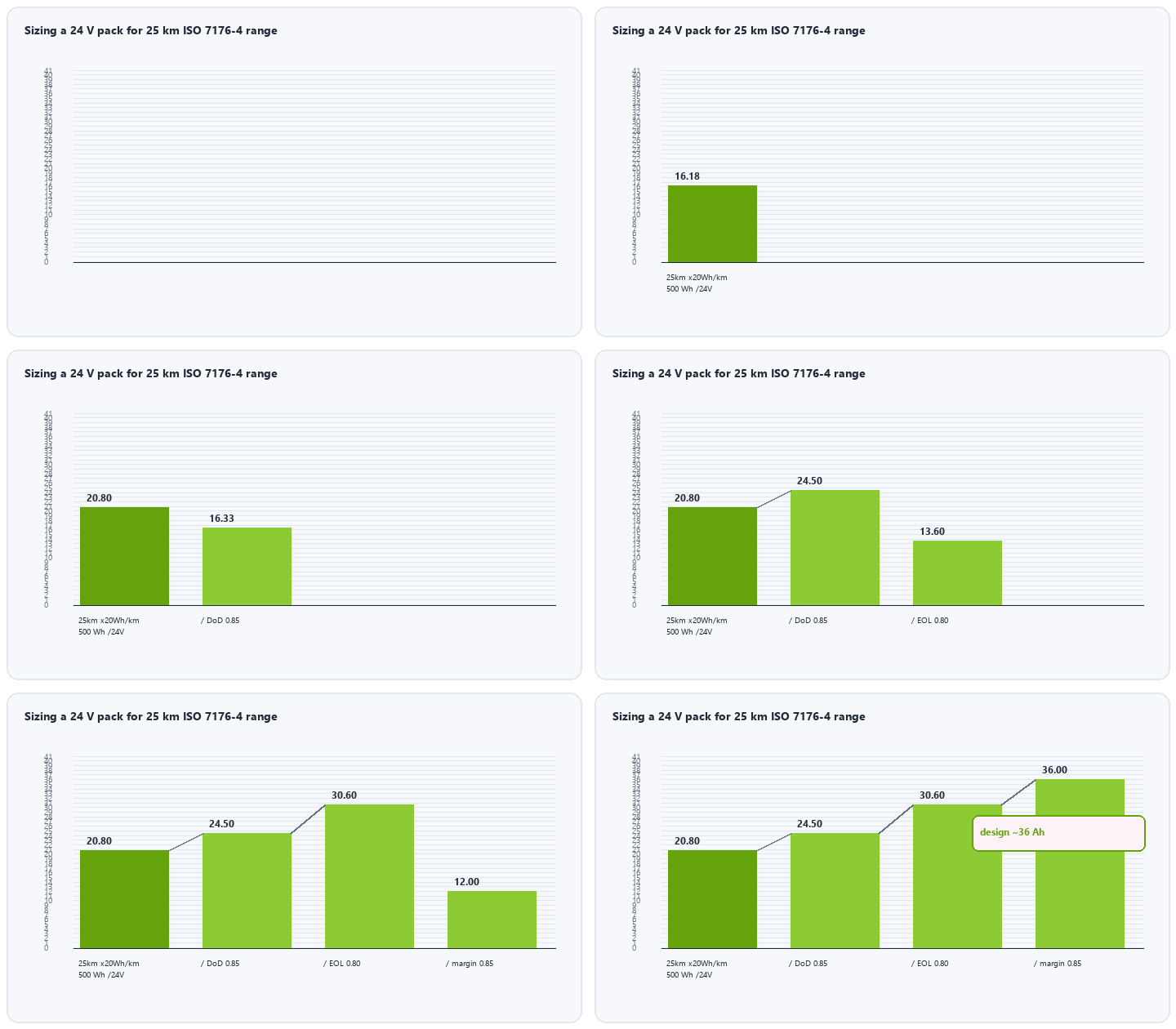
Work backwards from the ISO 7176-4 energy figure. Target 25 km at a measured 20 Wh/km: energy demand is 500 Wh. At 24 V that is 20.8 Ah raw. Apply usable-depth-of-discharge (NiMH about 0.85, SLA only about 0.5 if long life is wanted, lithium about 0.9), an end-of-life derating of 0.8 and a real-world margin of 0.85 for hills and cold: a NiMH design lands near 30 Ah, while an SLA design sized for cycle life would need far more nominal Ah — and kilograms — to deliver the same usable range. This is why chemistry and capacity cannot be chosen independently.
Traction packs are built for current: cells matched by internal resistance to prevent imbalance under 30–40 A transients, thick welded nickel-plated-copper busbars, flexible cell-to-cell links that survive chassis vibration, and protection sized for continuous traction current rather than instrument-level loads. Voltage sag at the controller's low-voltage cut-off is a key validation point — a pack that sags to cut-off on a hill strands the user even though energy remains.
NiMH chargers use constant current with -ΔV/temperature termination and a maintenance current, suiting overnight recharge; charge temperature should be supervised because mobility packs sit close to motors. For air travel, spare (uninstalled) lithium packs face watt-hour limits (around 100 Wh, up to 160 Wh with airline approval), while installed traction batteries and NiMH face fewer restrictions — a practical point worth stating in user documentation alongside standards such as ISO 7176-21 (EMC) and battery/charger safety requirements such as GB/T 18029.25.
Weijiang Power builds high-rate NiMH cells and 24 V custom traction packs for wheelchair and mobility OEMs: resistance-matched welded cells, vibration-robust construction, NTC protection and IEC 62133-1/UN 38.3 documentation. Send your range target, motor current and envelope and we will size a pack that delivers the kilometres, not just the ampere-hours.


