A smoke alarm is the most extreme example of a standby-dominant load in the whole battery industry: for years it does almost nothing, drawing only a handful of microamps while it watches for smoke, and then - in the seconds that justify its existence - it must drive an 85-decibel horn, flash indicators and, in a wireless-interconnected system, command every other alarm in the building to sound. European standalone alarms are governed by EN 14604, which sets detection, sound-pressure, power-supply and battery-monitoring requirements, and the market spans replaceable alkaline cells, decade-life sealed lithium units and mains-powered devices with a rechargeable backup. This first paper on nickel-metal hydride power for smoke and fire alarms dissects the standby-dominant load profile, quantifies the gap between quiescent and alarm current, explains the low-battery and self-test duties the standard implies, and maps - honestly - where sealed primary lithium, replaceable alkaline and rechargeable NiMH each belong, showing that NiMH is not a ten-year primary replacement but a strong, cycle-tolerant choice for mains-backed and interconnected backup roles.
For the overwhelming majority of its service life an optical smoke alarm runs its infrared LED and photodioreceiver in low-duty pulses and keeps its controller in a deep sleep. Published standalone-alarm specifications place average standby current at only a few microamps - some sealed-lithium photoelectric units cite below six microamps average - and it is this number, more than anything else, that sets the chemistry landscape. At such a current, self-discharge and shelf behaviour matter as much as active efficiency, and calendar life is governed by parasitic chemistry rather than load.
EN 14604 requires a power supply and battery-monitoring arrangement that keeps the alarm functional and warns before the battery can no longer support an alarm. In a pure standalone, field-replaceable or sealed-primary design, that microamp quiescent load is why a high-capacity primary lithium can support a ten-year sealed life while alkaline supports roughly three years and carbon-zinc nearer eighteen months - figures widely reflected in product datasheets. Those numbers define the benchmark any alternative chemistry must be measured against.
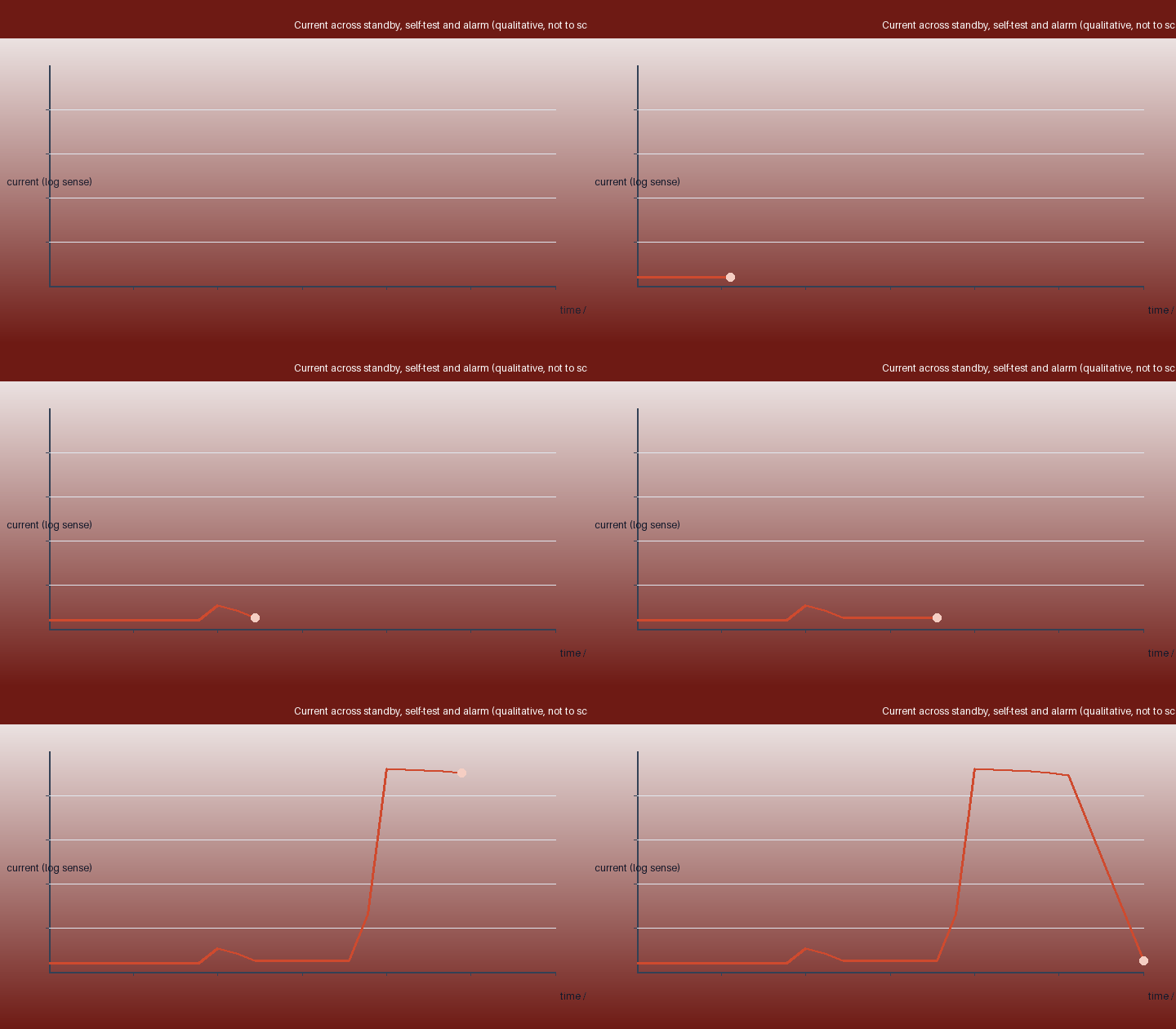
Between standby and full alarm sit recurring minor loads: periodic self-tests that exercise the optical chamber and horn at low level, an indicator blink, the monitoring circuit that compares battery voltage against a threshold, and - in wireless-interconnected alarms - regular keep-alive exchanges on the radio mesh. Each is tiny but non-zero, and their cumulative effect across years belongs in the energy model alongside raw quiescent current.
The low-battery warning is itself a standard-driven load: EN 14604-aligned devices must give an audible low-power indication - typically a short chirp, often around once a minute - for a defined minimum period while still remaining capable of raising a full alarm. Designing that warning window correctly requires knowing the battery's discharge shape near end of life. NiMH's flat 1.2-volt discharge plateau and predictable end behaviour make the threshold logic clean in a rechargeable backup role, whereas the declining voltage of a primary chemistry must be tracked against its own curve.
When smoke is detected the load changes by orders of magnitude. The piezo horn must reach at least 85 decibels at three metres under EN 14604, mains-backed photoelectric alarms cite operating currents on the order of tens of milliamps, and the acoustic transducer draws its current in pulses that the battery must supply without collapsing the controller rail. In a wireless-interconnected home the detecting unit also transmits an RF command that wakes every linked alarm - some systems interconnect a dozen or more units - adding a radio burst at the worst moment.
The battery must therefore hold two contradictory properties simultaneously: negligible self-discharge across years of near-idle, yet low enough internal impedance to drive the horn and radio burst on demand. This is precisely where chemistry impedance matters. Sealed NiMH cells are low-impedance devices - charged AA cells show tens of milliohms - so they drive piezo and radio pulses cleanly; their limitation is not pulse delivery but the self-discharge that makes them unsuitable as a decade-long sealed primary, which is why their correct home is a periodically recharged backup rather than a never-recharged standalone.
A large class of alarms is mains-powered with a backup that takes over the instant mains fails - during a fire that also cuts power, or in a building outage. Product datasheets describe 220-240-volt mains photoelectric alarms with a secondary rechargeable source, an 85-decibel horn at three metres and interconnect terminals. In this architecture the backup spends its life held ready by a controlled float or trickle charge and is called upon only when mains disappears, which is exactly the duty a sealed rechargeable chemistry is built for.
Here NiMH's properties align with the requirement: it tolerates the long float-standby with appropriate charge management, delivers the horn and interconnect pulse through its low impedance, cycles through repeated mains-outage events without replacement, and - in low-self-discharge grades - retains readiness between events. Unlike a primary backup that is silently consumed whether used or not, a properly managed NiMH backup is restored to full readiness whenever mains returns, giving a service life tied to the alarm rather than to a primary cell's calendar expiry.
Wireless-interconnected and smart alarms add recurring radio duty that a pure standalone never sees: mesh heartbeats, repeated alarm-state broadcasts during an incident, and sometimes gateway or protocol traffic. That raises both the average current and the frequency of high-current pulses, eroding the case for a small sealed primary and strengthening the case for a rechargeable backup in mains-assisted or powered-interconnect products.
In such systems the NiMH backup must cover not one horn but the controller, radio and horn together for a defined evacuation period after mains loss, a clearly bounded energy target that is straightforward to size. Low-self-discharge cells ensure the backup is genuinely ready after long quiet periods, and the pack's pulse capability ensures the mesh keeps broadcasting when every alarm sounds together - the most demanding simultaneous-load event the system will ever face.
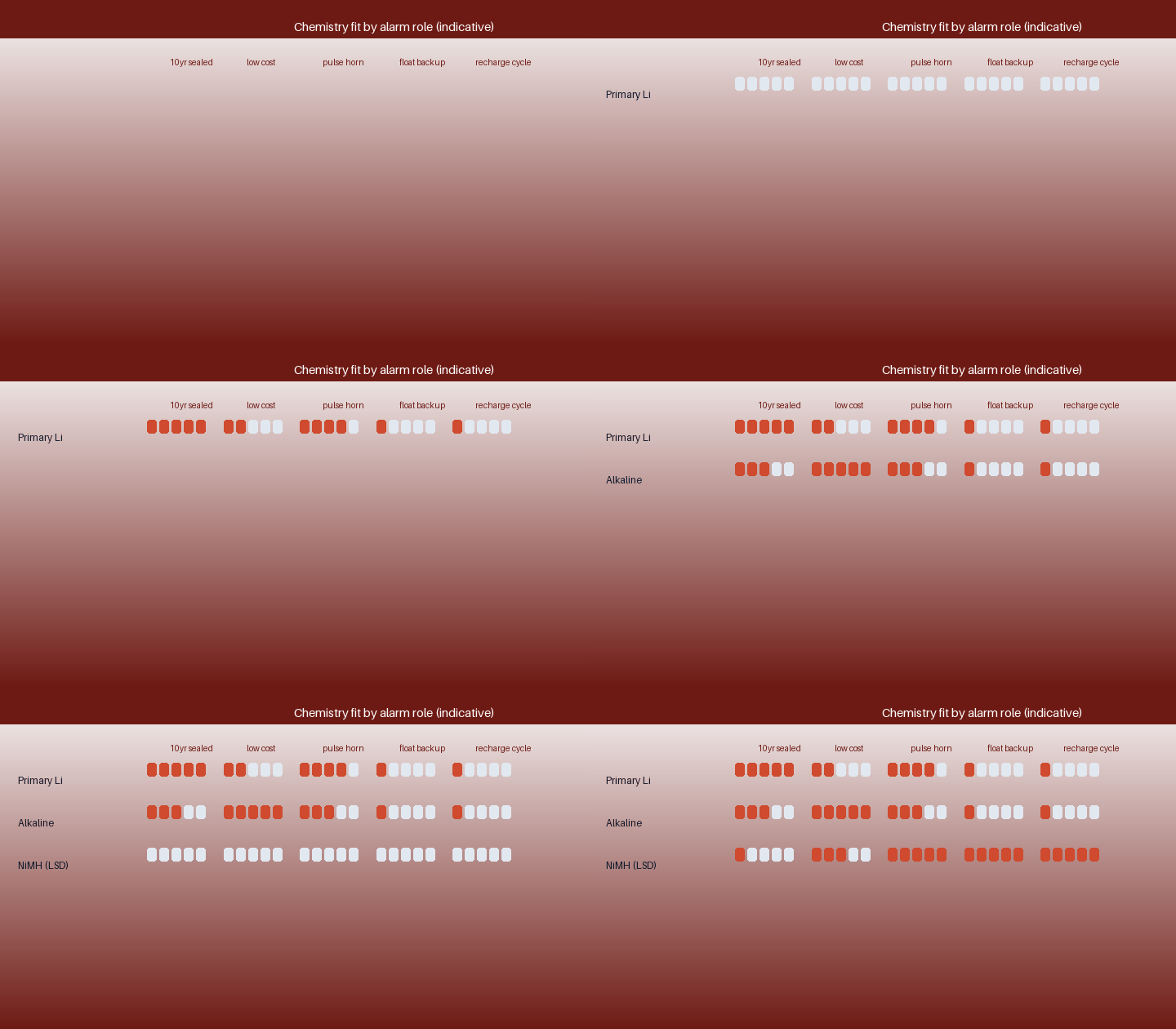
The load profile yields an honest, role-specific chemistry map rather than a single winner. For a sealed, never-serviced, ten-year standalone alarm, primary lithium is the appropriate technology and NiMH should not be forced into that role; for low-cost replaceable units alkaline remains common. For mains-powered alarms with backup, and for wireless-interconnected products that float a rechargeable source and need strong pulse delivery through repeated events, a well-managed low-self-discharge NiMH backup is a robust, cycle-tolerant, transport-simple choice with a flat discharge curve that simplifies low-battery logic.
The next paper turns that role into a design: sizing the NiMH backup to the evacuation-time energy target, float and trickle management for years of readiness, low-impedance pulse delivery for horn and radio, low-self-discharge selection and redundancy. The third paper covers the EN 14604 and CPR conformity route, UL 217 comparison, environmental endurance and the IEC battery and transport evidence that turns a backup design into a certifiable life-safety product.
Weijiang Power designs and manufactures sealed nickel-metal hydride cells and matched industrial packs for remote, off-grid and safety-related equipment, and supports OEM partners with IEC 61951-2 performance files, IEC 62133-2 safety evidence, pulse-load characterisation, wide-temperature testing and charger/pack co-validation. Tell us your duty cycle, peak current, temperature envelope, autonomy target and the standards your product must meet, and our engineers will specify a cell-and-pack combination that protects runtime, reliability and service life. Review the range on the products page.


