Approval of an onboard train-control backup is a type-test and safety-integration campaign, not a single battery certificate. This final paper maps the complete qualification route for a sealed nickel-metal hydride module that supports ETCS vital equipment under EN 50155. The campaign has four axes that must all close. The environmental axis follows EN 50155's temperature classes and start-up requirement, with dry and damp heat, low-temperature operation and cold start, thermal cycling and the supply interruption/dip/surge sequence, using EN 60068 methods. The mechanical axis applies EN 61373 random vibration and shock for the mounting category, looking specifically for internal cell and connection fatigue in a battery that must work after years of track input. The electromagnetic axis follows EN 50121, proving the charger and module neither disturb the BTM's weak balise reception and GSM-R receiver nor fail under traction and radio-frequency interference. The fire axis follows EN 45545 for materials and behaviour. Around these sits the battery dossier: IEC 62973-1 general requirements and tests for rolling-stock auxiliary batteries and IEC 62973-4 dedicated to secondary sealed nickel-metal hydride, with IEC 61951-2 cell performance, IEC 62133-2 cell safety and UN 38.3 transport. The paper explains how these are sequenced, how cold hold-up and end-of-life autonomy are demonstrated rather than assumed, how supervision and fail-safe behaviour are tested, and how the complete evidence is integrated into the onboard train-control system's safety documentation and vehicle type approval.
The module is tested at the declared operating class - for cold-rated stock typically OT4 or OT6 covering -40 degrees C, and for hot cubicles the +70/+85 classes - including the ten-minute start-up across -40 to +85. Low-temperature hold-up is demonstrated by cold-soaking the pack and then applying the real onboard load with its GSM-R and BTM peaks, proving the logic rail stays above cut-off. High-temperature tests and thermal cycling bound float life and check seals and contacts.
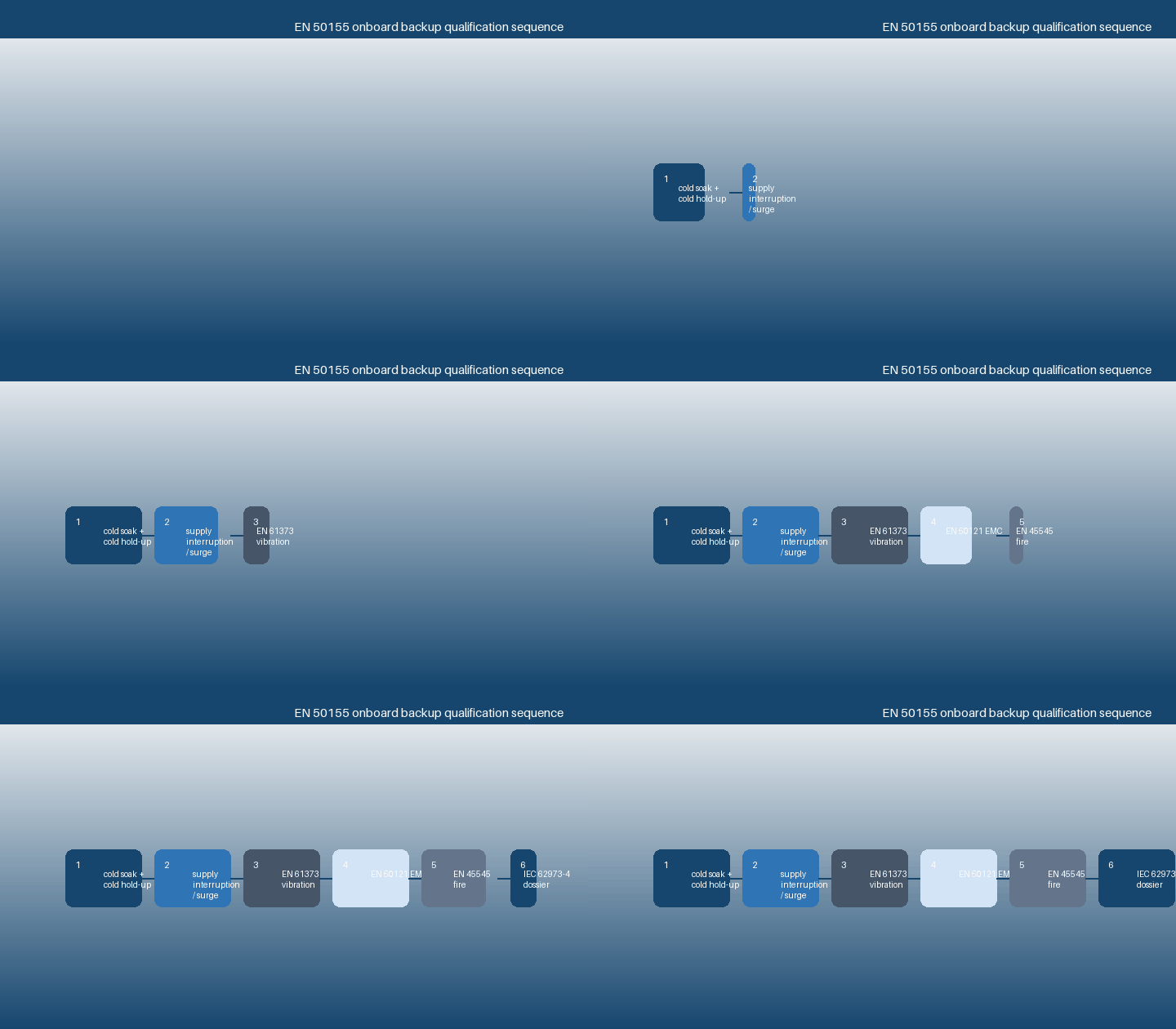
Supply tests reproduce EN 50155's nominal voltages and their tolerances, interruptions and changeover gaps, dips, ripples and surges, confirming the module rides through the defined events, transitions cleanly between bus and battery, and never causes a vital reset or a back-feed fault. The first animated figure sequences the environmental and supply tests; the cold hold-up and the interruption ride-through are the two that most commonly expose an under-specified consumer-cell design.
EN 61373 defines random vibration spectra and shock levels by function and mounting (body, bogie or axle). A body-mounted cubicle module receives long-duration random vibration in three axes and functional and simulated-long-life shock tests; battery-specific failure modes are internal tab or weld fracture, cell movement, connector fretting and fastener loosening. Tests are run with the pack electrically representative, and hold-up is demonstrated before and after the mechanical exposure to catch degradation that a simple post-test visual check would miss.
Construction evidence - restrained cells, anti-vibration mounts where needed, welded interconnections, locking connectors and cable strain relief - is part of the report. Because a backup battery is expected to sit idle for years and then work after a derailment-grade event, mechanical robustness carries safety weight comparable to the electrical tests.
The EN 50121 railway EMC series sets emission and immunity for rolling stock and the fixed installation. Onboard, the critical interactions are conducted noise from the charger onto the bus and radiated/conducted immunity in the presence of traction converters, GSM-R transmit power and balise up-link fields. The module is tested for conducted and radiated emissions within limits and for immunity to electrostatic discharge, electrical fast transient/burst, surge, conducted and radiated RF, and magnetic fields.
The passive NiMH reservoir adds no switching noise; the charger carries the EMC design effort with filtering, layout and shielding. A key integration check confirms the backup does not perturb the BTM antenna cable or the radio during charge or support modes - an EMC result that must be demonstrated in the final cubicle arrangement, not only on a bench unit.
EN 45545 classifies railway products by hazard level and operation class and sets requirement sets for ignition, flame spread, heat release, smoke density and toxicity. The backup module's enclosure, insulation, labels, cable and any potting or adhesives are selected to the declared R-set, and the sealed NiMH chemistry's lack of free electrolyte and limited gas emission simplify the case relative to flooded cells.
Documentation lists materials and their fire classifications and, where required, includes component fire test reports. The safety argument also addresses electrical fault behaviour - external short, overcharge and single-cell failure - showing the module isolates or fails safely without fire or propagation, consistent with the cell safety standard and the vehicle fire-safety analysis.

IEC 62973-1 defines general requirements and test methods for rolling-stock auxiliary batteries, and IEC 62973-4 applies them specifically to secondary sealed nickel-metal hydride cells and batteries, giving the railway-specific NiMH reference that designers and notified/assessment bodies expect. Underlying these are IEC 61951-2 for sealed NiMH cell performance (capacity, internal resistance, charge retention, endurance), IEC 62133-2 for sealed cell/battery safety, and UN 38.3 for transport, with the sealed non-lithium NiMH generally simpler to ship than lithium.
The second animated figure layers the dossier. The pack report ties cell certificates to the railway tests: measured hold-up at cold and after vibration, float/endurance behaviour, charge retention after the maximum idle interval, abuse tests, and construction and traceability records. Lot consistency and controlled substitution rules ensure replacement modules remain within the qualified design.
The backup enters the onboard train-control safety argument as an element supporting defined safety functions - ride-through, orderly shutdown with intact JRU record, and any extended emergency support. Its reliability targets derive from the EN 50126 RAMS process, supervision firmware follows EN 50128 where safety-related, and the electronic system context follows EN 50129 principles; the supplier provides failure-mode data and the fail-safe behaviour evidence these require.
Type approval then combines the EN 50155 environmental/supply report, EN 61373 mechanical report, EN 50121 EMC report, EN 45545 fire evidence and the IEC 62973-4 battery dossier with the integration tests on the actual cubicle and vehicle. A manufacturer that supplies construction-stable sealed NiMH cells, complete and mutually consistent certificates, and cold/vibration hold-up data removes the most frequent approval bottleneck and gives the integrator a defensible, cadmium-free backup for the driver's last authority.
Weijiang Power designs and manufactures sealed nickel-metal hydride cells and matched industrial packs for remote, off-grid and safety-related equipment, and supports OEM partners with IEC 61951-2 performance files, IEC 62133-2 safety evidence, pulse-load characterisation, wide-temperature testing and charger/pack co-validation. Tell us your duty cycle, peak current, temperature envelope, autonomy target and the standards your product must meet, and our engineers will specify a cell-and-pack combination that protects runtime, reliability and service life. Review the range on the products page.


