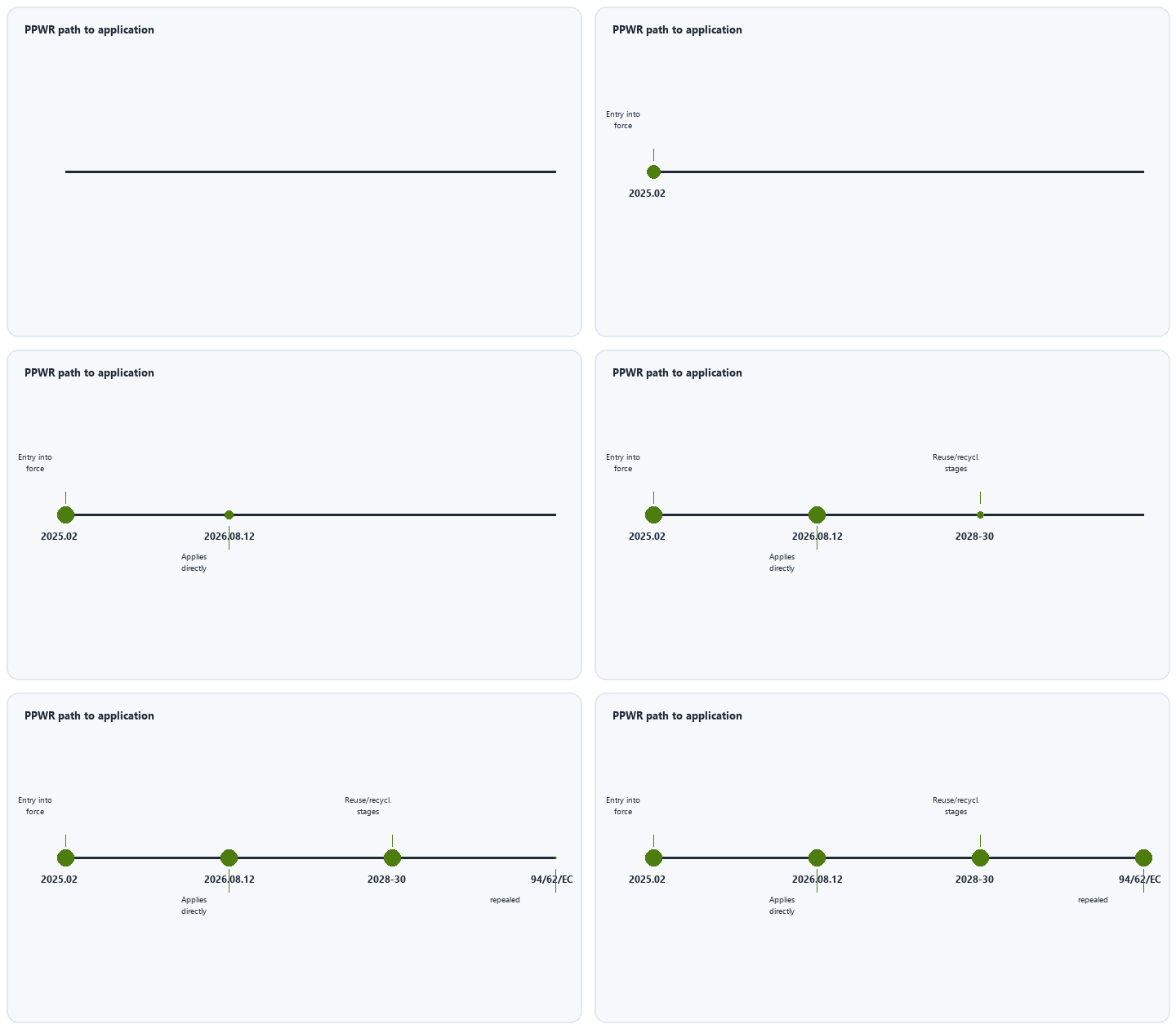
The Packaging and Packaging Waste Regulation (PPWR), Regulation (EU) 2025/40, entered into force on 11 February 2025 and applies directly in all member states from 12 August 2026, replacing the three-decade-old Directive 94/62/EC. For battery exporters it runs in parallel with Regulation (EU) 2023/1542: the cells must comply, and now every layer of packaging must comply as well. This paper maps the obligations a nickel-metal hydride (NiMH) shipper must satisfy at each packaging level.
Directive 94/62/EC set essential requirements that member states transposed differently; Regulation 2025/40 is binding in its entirety and applies without national transposition, with Commission guidance (C/2026/3084) clarifying implementation. From 12 August 2026 packaging may be placed on the EU market only if it meets the regulation: heavy-metal limits, substance restrictions, minimisation and recyclability requirements, conformity assessment, an EU Declaration of Conformity and CE-style traceability. Later-stage obligations on reuse targets and recycled-content in packaging phase in from 2028–2030 and are not part of the 2026 gate — a distinction that keeps the immediate work focused.
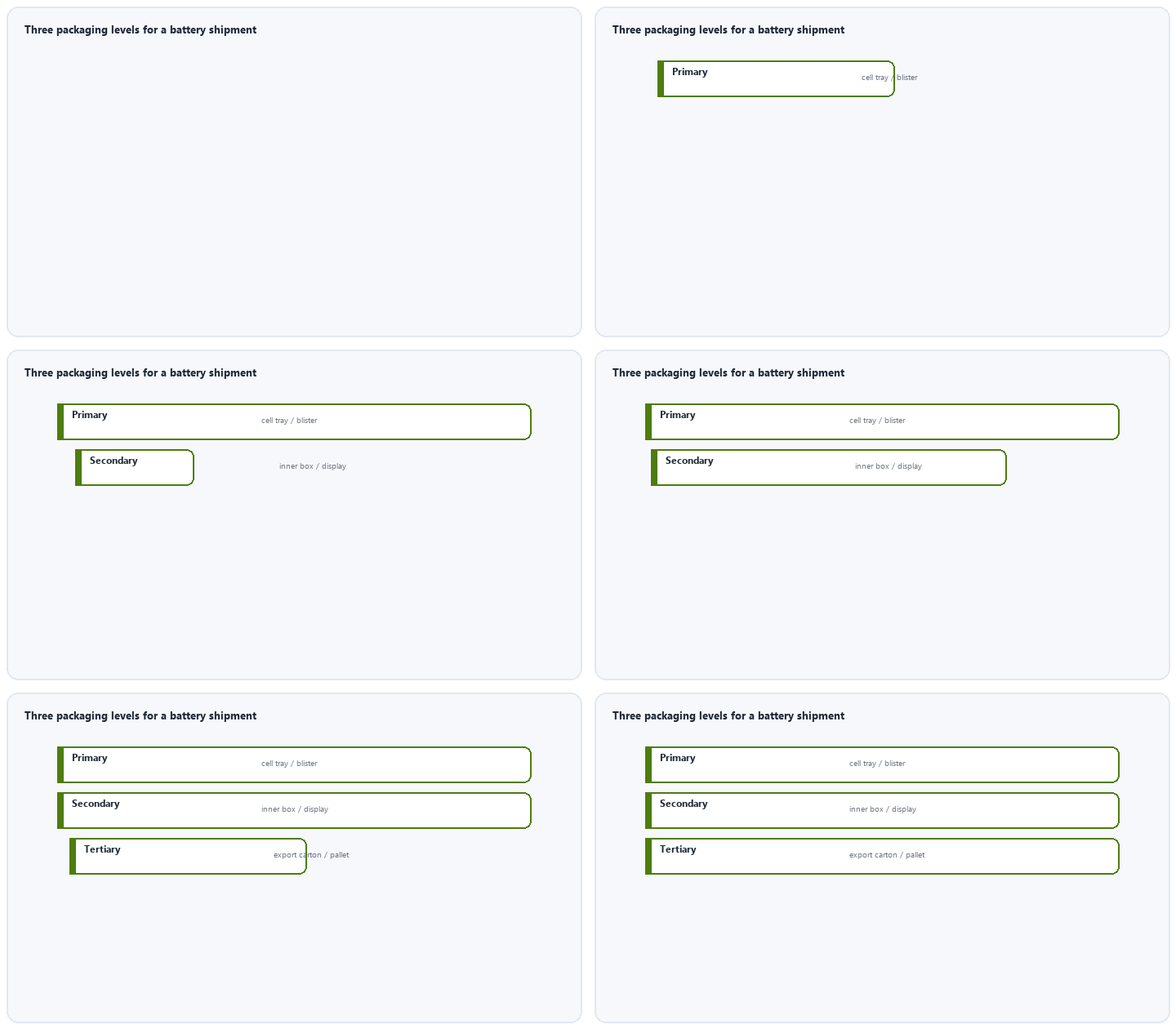
PPWR defines primary (sales) packaging — the blister, tray or box touching the product; secondary (grouped) packaging — inner cartons, display units grouping multiple sales packs; and tertiary (transport) packaging — export cartons, pallets, stretch wrap and edge protection. Critically, each packaging type and level must individually satisfy the requirements and carry its own conformity assessment and Declaration of Conformity; a "cascaded" traceability structure may link the levels operationally, but it does not replace per-level declarations — the precise point raised in European customers' 2026 supplier inquiries.
At the August 2026 gate, each packaging component must meet: the combined heavy-metal limit of 100 mg/kg for lead, cadmium, mercury and hexavalent chromium summed; REACH (EC) 1907/2006 Annex XVII restrictions on materials (food-contact rules under 1935/2004 are not relevant to battery packs, but SVHC and SCIP duties are); packaging minimisation by weight and volume with documented assessment; recyclability design aligned to the design-for-recycling criteria; a type/batch/serial identifier under Article 15(5); technical documentation and an EU Declaration of Conformity per Annex VIII; and the importer's name and address marked on packaging. National packaging EPR registration (LUCID in Germany, equivalent registers elsewhere) remains obligatory in parallel and is verified by marketplaces from the same 12 August 2026 horizon.
A practical PPWR program: inventory every packaging component across the three levels (paper card, printed carton, blister plastic, clear film, kraft, tape, label, pallet); obtain material declarations and heavy-metal test reports to IEC 62321 (ICP-OES for Pb/Cd/Hg, UV-Vis for CrVI) with a 2 mg/kg detection limit; run the minimisation and recyclability assessments using harmonised standards EN 13427 (framework), EN 13428 (source reduction), EN 13429 (reuse) and EN 13430 (material recycling); issue a separate Declaration of Conformity per packaging type; assign batch identifiers and link them to production records; and register/support the customer's packaging-EPR obligations. A real 16-component packaging test case in our dedicated walkthrough paper shows how cleanly a well-controlled pack passes — all components non-detected apart from one copper element at 19 mg/kg, far below the 100 mg/kg combined cap.
After 12 August 2026 non-compliant packaging blocks placement: customs and market surveillance may reject goods, Germany's national implementation (VerpackDG succeeding VerpackG) carries per-violation penalties up to 200,000 euros, and online marketplaces verify packaging EPR and documentation before listings remain live. Because batteries already carry a heavy compliance file, integrating PPWR evidence into the same shipment pack is efficient — and it answers the exact document requests now arriving from German and Nordic customers ahead of the deadline.
Weijiang Power ships NiMH cells and packs with PPWR-ready packaging: per-component IEC 62321 heavy-metal reports, REACH/SVHC declarations, minimisation and recyclability assessments, batch traceability across all three packaging levels and separate EU Declarations of Conformity per packaging type. Send your packaging specification or your customer's PPWR questionnaire and we return the matched evidence pack before the 12 August 2026 gate.


